
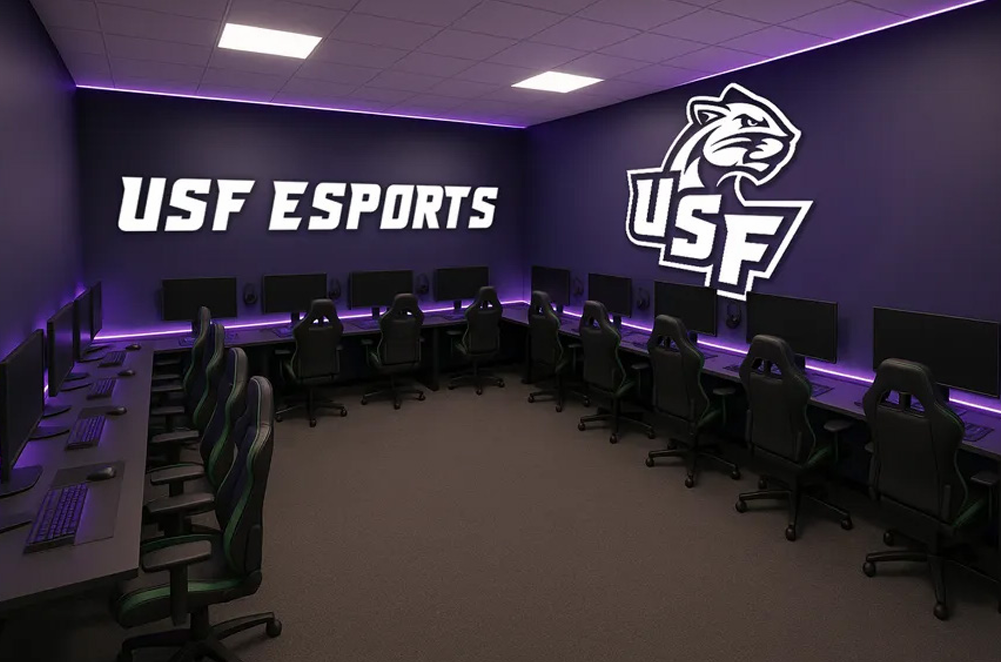
USF Expands Athletics Into the Digital Arena with New Esports Program
By Reece Scott
The University of Sioux Falls competition is no longer limited to fields and courts, it’s moving onto com
puter screens.
Competitive video gaming has grown into a global industry with millions of viewers and millions of dol
lars in prize money each year. Now, the University of Sioux Falls is joining the movement by launching its own
esports program, led by new coach Elizabeth (Libby) Franken, a former four year captain at Buena Vista Univer
sity and an accomplished collegiate competitor.
Franken brings competitive experience to the program after helping lead her team to victory in the
NECC Esports Grand Finals in December 2023. During her time at Buena Vista University, she specialized in the
tactical team-based shooter Valorant. At USF, Franken will lead students competing in several popular esports
titles including League of Legends, Valorant, Marvel Rivals, Rocket League, and Overwatch 2.
Beyond competition, Franken emphasized that the program is intended to build a strong sense of com
munity on campus. While there is a pathway for highly competitive players to pursue esports at a higher level,
she noted that passion and dedication matter more than raw skill. Students who are interested in esports but may
not want to compete at a varsity level may still have opportunities to get involved, as future plans include the
possibility of developing recreational teams to make the program more inclusive.
Esports, short for electronic sports, involves organized competitive video gaming where players com
pete individually or on teams in structured leagues and tournaments. While some people may still view gaming
as simply a hobby, the competitive scene surrounding esports now closely resembles traditional sports in both
structure and opportunity.
Professional esports players often earn income in ways similar to traditional athletes. In football, for
example, players earn salaries from their teams while top performers may also receive endorsement deals and
performance bonuses. Esports follows a similar model. Many professional players receive salaries from esports
organizations, compete in tournaments for prize money, and sign sponsorship deals with technology and gaming
companies.

Prize pools for major esports tournaments can reach significant amounts. In 2025 alone, esports compe
titions awarded more than $40 million in total prize winnings to competitors around the world. In addition to
prize money, sponsorships and streaming partnerships often provide additional income for professional players
and teams. Like traditional sports, esports competitors also compete as part of professional teams or organizations.
These organizations recruit players, provide coaching and training, and compete in leagues and tournaments
around the world. Teams often have coaching staff, analysts, and support personnel who help players improve
strategy, communication, and performance during competitions.
One example of this professional structure can be seen in Lee Sang-hyeok, better known by his in-game
name “Faker.” Widely regarded as one of the greatest players in competitive League of Legends history, Faker com
petes for the esports organization T1. According to data from Liquipedia, he has earned approximately $2,136,648
in tournament prize winnings alone, not including his salary or sponsorship deals. Like star athletes in traditional
sports, top esports competitors often receive contracts from professional organizations and build large fan follow
ings that attract sponsorship opportunities.
The popularity of esports has expanded rapidly in recent years. Industry estimates show that global es
ports viewership reached approximately 640 million viewers in 2025, with fans watching tournaments through live
streaming platforms and online broadcasts. Major esports events can attract audiences comparable to traditional
sporting events, demonstrating the industry’s rapid growth.
Colleges across the country have begun recognizing esports as an opportunity for students to compete
while pursuing higher education. Many institutions now offer organized esports programs similar to traditional
athletics, complete with structured practices, scheduled matches against other schools, and sometimes scholarship
opportunities for talented players. Construction work on the new Esports facility in the Mears Library

– Photo courtesy of Gunner Gould
Supporters of collegiate esports say these programs allow students to represent their school in competition
while gaining experience in a growing industry. Beyond playing competitively, esports programs can connect stu
dents with careers in technology, broadcasting, marketing, game design, and event production.
As the program is still in its early stages, students interested in joining are encouraged to connect directly
with Franken. While the official website is still being developed, she currently provides informational packets to
prospective players that outline program details, expectations, and opportunities.
“Esports is growing rapidly in South Dakota. There are 44 recognized high school esports teams just in
this state, and we feel like this is a great opportunity to build this community on our campus and give students the
chance to represent USF in competitions with other colleges and universities,” said Andrew Porteous, director of
student life and housing.
With the addition of the new esports program and the leadership of coach Franken, the University of Sioux
Falls hopes to provide students with an opportunity to compete in a rapidly growing competitive field while bring
ing a new form of athletics to campus.
As esports continues to grow worldwide, programs like this may represent the next evolution of collegiate
competition, one where the arena is digital, but the teamwork, strategy, and dedication remain very real. For more
information on the USF Esports program, check out their new Instagram page – @usiouxfalls_esports.